11 January 2013

Rickie Lee Jones: "Flying Cowboys", Redux


Steely Dan guitarist Walter Becker only did one really important thing musically while he and Donald Fagen an Becker were taking their long hiatus (1981-1993). Guitarist / Producer-for-this superb album, released in 1989. Becker creates an ideal sonic format for Jones' neo-beat poetry/lyrics: smooth, almost-jazz arrangements that stay in Rickie Lee's trademark groove. There's even a soulful lesson delivered in a cover of Gerry and the Pacemakers' Don't Let the Sun Catch You Cryin'.

I try to avoid quoting Rolling Stone magazine here, but this time they nailed it:
While it explores a wealth of themes and musical styles, the album unfolds with the ongoing grace of one long song. What provides unity to the album's varied elements is its seductive rhythmic flow, the down-home surrealism of Jones's lyrics, the clarity and intelligence of Walter Becker's production and, of course, the sensual elasticity of Jones's extraordinary singing (Rolling Stone, Nov.2, 1989, Reviews ).
This is by far my favorite Rickie Lee Jones record, though I can't pretend to have heard them all. Let's just say that the "rhythmic flow" of this album will draw you in and never let you go. To wit:


10 January 2013

Emmylou Harris - "Plaisir d'Amour" from "Stumble into Grace " (2003)


Emmylou Harris - Plaisir d'Amour 
(traditional; The McGarrigle Sisters, harmony vocals)

This traditional French song turns up twice in classic cinema of the late '40s and '50s -- once "performed by" Montgomery Clift and once by Deborah Kerr, brilliantly in Tea and Sympathy. Emmylou's is by far the definitive interpretation.


07 January 2013

Two Divas for the Ages: Aretha Franklin and Annie Lennox

Aretha Franklin and Annie Lennox

Here, from The Rock 'a' Roll Hall of Fame 25th Anniversary Show, we find a very special collaboration. The Queen of Soul, Aretha Franklin, joins with British '80s rocker Annie Lennox to perform one of Aretha's timeless hits, Chain of Fools (original, 1967). To my mind, Annie's on of the few artists alive who can hold her own on stage with living legend Aretha Franklin.


The more I thought about this live performance, adding Aretha's original became imperative.


Enjoy!

29 December 2012

'Believe It or Not, He Remembers It All': "Life": A Memoir by Keith Richards


Keith Richards

Keith, Mick and Brian and Co. in 
Achmed's Hash Shop, Tangier, Morocco

"I think I can talk for the Stones most of the time, and we didn't care 
what they wanted out there. That was on of the charms of the Stones
And the rock-and-roll that we did come out with on Beggars Banquet was enough. 
You can't say apart from "Sympathy" and "Street Fighting Man" that there's 
rock and roll on Beggars Banquet at all .... This is music." 
-- pp. 238- 239, Life (paperback, 2010) by Keith Richards
_____________________________________________________
....
Well his world is torn and frayed
It's seen much better days
Just as long as the guitar plays
He'll steal your hear away
Steal your heart away 
....
- chorus of Torn and Frayed (Jagger / Richards),
Exile on Main St (1972), The Rolling Stones

There is clearly no ghost writer here. Keith Richards, principal guitarist and co-songwriter for The Rolling Stones, let's his personality come shining through on every page of his memoir, Life. (Keith did, by his own admission, need an editor, his trusted colleage journalist James Fox.)

Livin' as hard as Kieth has, it's incredible all that he remembers. We read an unvarnished tale of this working class kid from the London projects (aka Estates) making good with the Stones, the band that fueled with his enormous talent. This memoir also gives us a window into how his music reflected his hard livin', on and off the road. Keith shares tales of sometimes dubious adventures, family lives, loves, and heartbreaks. We also hear of the battles Keith had with his partner and friend, Mick Jagger, with press distortions wiped away.

In a recent interview, actor Malcolm McDowell said he thought everybody should read this book. My goal here is less ambitious; I just want to share some pleasant surprises I founding reading the book. Wanna know how bands work: why some stick together and some blow apart? Interested in the evolution during the 1960s of the modern LP? And for hard core fans, there are details more specific to the Stones. I was fascinated reading that the original studio version of Jumpin' Jack Flash was done all on acoustic guitars, played through over-loaded 1st generation cassette players. Stones album back stories come alive with Richards' pen, just as his guitar brought brought a wealth of popular music to life. If you want to know more about why the music of late '60s and early '70s  is so important to a lot of folks like me, read this book.

Keith, a surprisingly charming man, tells his story with unexpected candor. He traces the path of a great British blues rock band making musical history over the last 50 years as well as his life inside and out of that band. I cherish what I learned from this detailed account of Keith on Keith.

Here's a little taste of Keith slowing things down, fronting his other great band, The X-Pensive Winos.


Keith Richards and The X-pensive Winos

25 December 2012

"Too Good for the Basement" Series (No. 2): Great Rock Vocalists: Peter Wolf & Co., "Nothin' But the Wheel" (2002)

[reworked and reposted; from early 2011]


Peter Wolf live at Wolftrap (2010)
____________________________________


This is one of the best crossover tracks by a great rock singer/songwriter giving us a modern country classic. Peter Wolf, former front man for The J. Geils Band -- here with another of the great rock vocalists and a first class team of studio musicians -- cutting the perfect road song for his 2002 solo album Sleepless.

One more a thing about "another of the great rock vocalists": Jagger may not have stuck around for more of the sessions for the Sleepless album than just to cutting the harmonies for Nothin' but the Wheel, but Mick certainly left his influence all over Peter's vocals on the other album cuts I've heard. But that's the way it goes when you're rollin' down the interstate looking for a back road to unwind.

And yes, the Highway 41 in Nothin' but the Wheel is the same road Dickie Betts was, in the song, 'born rollin' down' "... in the backseat of a Greyhound bus ..."

I love this song more each time I hear it. So give her a spin; eh, what do you have to lose?

14 December 2012

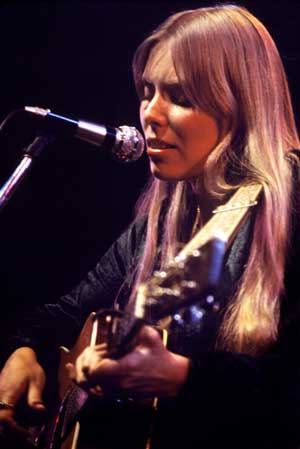
"It's Comin' on Christmas, They're Cuttin' Down Trees ...." -- Joni Mitchell

Joni Mitchell

"Nothing ever goes away until it has taught us what we need to know."

"A little love and affection, in everything you do,
Will make the world a better place
With or without you."
-- Neil Young

Combine those two principles, those two observations, those two insights. In reflecting upon them, I find a working theory about why the women in my life can both bring me so much joy, while also leaving me clinging to the dying embers of a painful relationship.

And so it is with the Christmas season, for those who partake. Christmas in America carries with it a lot of baggage, some of it worth cherishing, some of it an almost unbearable burden. But Sister Chödrön reminds us the season has things to teach us. And since the Mayans were wrong about existence ending this week, Christmas won't be going anywhere, remaining firmly rooted in western culture. Rooted there to teach us things we need to know.

And so I come to this year's Christmas song, one that does not fall within the traditional Christmas songbook. I offer River, a song about a young Canadian woman exploring her feelings, at Christmas time, about a shattered relationship.

I think the insights offered here, one by a Bhuddist nun and two by Canadian singer/songwriters, have much to offer us this holiday season. I hope "my aim is true."

07 December 2012

"Desperately in Need, of Some Stranger's Hand, in a Desparate Land"

Lieutenant Colonel Kilgore (Robert Duvall): 
"You know, one time we had a hill bombed, for 12 hours. 
When it was all over, I walked up. 
We didn't find one of 'em, not one of those stinkin' dink bodies. 
But the smell, you know, that gasoline smell -- the whole hill. 
Smells like -- victory. 
{Kilgore pauses to reflect} 
Someday this war's gonna end."

Director Francis Ford Coppola chooses The End by The Doors to open his Viet Nam war epic, Apocalypse Now Redux (1979, 2001). I can't think of a more powerful use of an existing song to set the mood for this reworking of a screenplay, originally titled "The Psychedelic Soldier", to a film interpretation -- set in the Viet Nam war -- of Joseph Conrad's Heart of Darkness (1902).

But I'm open to suggestions. Take the dream sequence ride in the clip below; tell me what you think.